Pages

network cisco ccna gns3 certification arteq

network cisco ccna gns3 certification arteq
a network runs through it

Search insearchofthecert

Showing posts with label lsa. Show all posts

Sunday, November 25, 2012

area types and lsa's part deux...

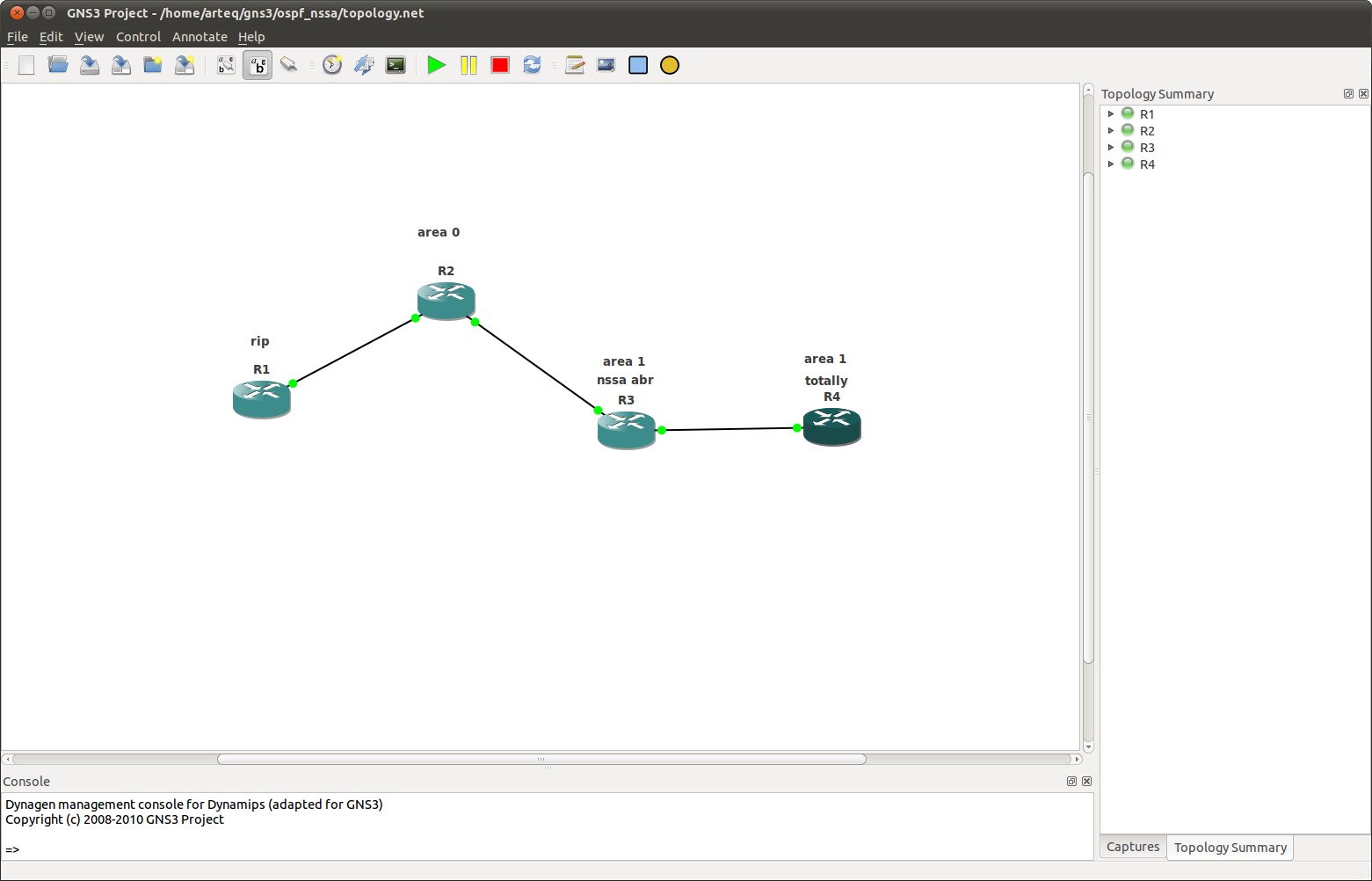
continuing from the last post...


basic... rip and ospf haven't been redistributed yet, and nssa is not yet in effect...

r4#sh ip ospf data

            OSPF Router with ID (4.4.4.4) (Process ID 1)

        Router Link States (Area 1)

Link ID         ADV Router      Age         Seq#       Checksum Link count
2.2.2.2         2.2.2.2         444         0x80000002 0x0061A3 1
3.3.3.3         3.3.3.3         240         0x80000005 0x009413 3
4.4.4.4         4.4.4.4         229         0x80000003 0x00F5D4 2

        Net Link States (Area 1)

Link ID         ADV Router      Age         Seq#       Checksum
10.1.2.1        2.2.2.2         444         0x80000001 0x008F80
10.1.4.3        3.3.3.3         240         0x80000001 0x009B64

        Summary Net Link States (Area 1)

Link ID         ADV Router      Age         Seq#       Checksum
2.2.2.2         2.2.2.2         586         0x80000001 0x00FA31
10.1.1.0        2.2.2.2         606         0x80000001 0x00BD6A
r4#

lsa types 1,2 and 3 are represented on r4, as expected...


we'll first redist rip and ospf...

 r4#sh ip ospf data

            OSPF Router with ID (4.4.4.4) (Process ID 1)

        Router Link States (Area 1)

Link ID         ADV Router      Age         Seq#       Checksum Link count
2.2.2.2         2.2.2.2         41          0x80000005 0x00619E 1
3.3.3.3         3.3.3.3         1359        0x80000005 0x009413 3
4.4.4.4         4.4.4.4         67          0x80000005 0x00F1D6 2

        Net Link States (Area 1)

Link ID         ADV Router      Age         Seq#       Checksum
10.1.2.1        2.2.2.2         1562        0x80000001 0x008F80
10.1.4.3        3.3.3.3         1358        0x80000001 0x009B64

        Summary Net Link States (Area 1)

Link ID         ADV Router      Age         Seq#       Checksum
2.2.2.2         2.2.2.2         1704        0x80000001 0x00FA31
10.1.1.0        2.2.2.2         1724        0x80000001 0x00BD6A

        Type-5 AS External Link States
          
Link ID         ADV Router      Age         Seq#       Checksum Tag
1.0.0.0         2.2.2.2         40          0x80000001 0x003456 0
r4#

now we have the expected external type on r4...

and for completeness, rip has picked up some new friends...

rip#sh ip route rip

Gateway of last resort is not set

R     2.0.0.0/8 [120/5] via 10.1.1.2, 00:00:27, FastEthernet0/0
R     3.0.0.0/8 [120/5] via 10.1.1.2, 00:00:27, FastEthernet0/0
R     4.0.0.0/8 [120/5] via 10.1.1.2, 00:00:27, FastEthernet0/0
      10.0.0.0/8 is variably subnetted, 4 subnets, 2 masks
R        10.1.2.0/24 [120/1] via 10.1.1.2, 00:00:27, FastEthernet0/0
R        10.1.4.0/24 [120/5] via 10.1.1.2, 00:00:27, FastEthernet0/0

back to stubs...

to make area 1 a stub include the abr (in this case the bb or r1) and r3... the rule is that all routers in stub areas participate in being stubs... in other words, if we simply made r3 a stub, it would  lose it's adjacency...

r2#sh ip ospf
omitted
 Area 1
        Number of interfaces in this area is 1
        It is a stub area

r3 has it's adjacency to r1 but no longer has type 5's...

r3#sh ip ospf data

            OSPF Router with ID (3.3.3.3) (Process ID 1)

        Router Link States (Area 1)

Link ID         ADV Router      Age         Seq#       Checksum Link count
2.2.2.2         2.2.2.2         533         0x80000007 0x008976 1
3.3.3.3         3.3.3.3         532         0x80000008 0x0018A0 3
4.4.4.4         4.4.4.4         1273        0x80000005 0x00F1D6 2

        Net Link States (Area 1)

Link ID         ADV Router      Age         Seq#       Checksum
10.1.2.3        3.3.3.3         532         0x80000001 0x006BA0

        Summary Net Link States (Area 1)

Link ID         ADV Router      Age         Seq#       Checksum
0.0.0.0         2.2.2.2         537         0x80000001 0x0075C0
2.2.2.2         2.2.2.2         537         0x80000003 0x001517
10.1.1.0        2.2.2.2         537         0x80000003 0x00D750

make area 1 totally stubby by adding no-summary to r2...

on r2 sh ip ospf:

Area 1
        Number of interfaces in this area is 1
        It is a stub area, no summary LSA in this area
        Generates stub default route with cost 1

r3#sh ip ospf data

            OSPF Router with ID (3.3.3.3) (Process ID 1)

        Router Link States (Area 1)

Link ID         ADV Router      Age         Seq#       Checksum Link count
2.2.2.2         2.2.2.2         847         0x80000007 0x008976 1
3.3.3.3         3.3.3.3         846         0x80000008 0x0018A0 3
4.4.4.4         4.4.4.4         1587        0x80000005 0x00F1D6 2

        Net Link States (Area 1)

Link ID         ADV Router      Age         Seq#       Checksum
10.1.2.3        3.3.3.3         846         0x80000001 0x006BA0

        Summary Net Link States (Area 1)

Link ID         ADV Router      Age         Seq#       Checksum
0.0.0.0         2.2.2.2         163         0x80000003 0x0071C2

change to nssa on r2 and r3 and we have:

r3#sh ip ospf data

            OSPF Router with ID (3.3.3.3) (Process ID 1)

        Router Link States (Area 1)

Link ID         ADV Router      Age         Seq#       Checksum Link count
2.2.2.2         2.2.2.2         21          0x8000000B 0x000FE2 1
3.3.3.3         3.3.3.3         20          0x8000000C 0x009715 3
4.4.4.4         4.4.4.4         95          0x80000007 0x0004C1 2

        Net Link States (Area 1)

Link ID         ADV Router      Age         Seq#       Checksum
10.1.2.3        3.3.3.3         15          0x80000005 0x00EA15
10.1.4.4        4.4.4.4         95          0x80000001 0x006397

        Summary Net Link States (Area 1)

Link ID         ADV Router      Age         Seq#       Checksum
2.2.2.2         2.2.2.2         22          0x80000004 0x009A88
10.1.1.0        2.2.2.2         22          0x80000004 0x005DC1

        Type-7 AS External Link States (Area 1)
         
Link ID         ADV Router      Age         Seq#       Checksum Tag
1.0.0.0         2.2.2.2         21          0x80000001 0x008213 0


just like in the stub scenario, r4 will have to become an nssa also to particpate... all routers in the area...

r4(config-router)#no area 1 nssa
r4(config-router)#
*Nov 25 14:40:10.931: %OSPF-5-ADJCHG: Process 1, Nbr 3.3.3.3 on FastEthernet0/0 from FULL to DOWN, Neighbor Down: Adjacency forced to reset

add area 1 nssa no-summary to r2 and:

r3#sh ip ospf data

            OSPF Router with ID (3.3.3.3) (Process ID 1)

        Router Link States (Area 1)

Link ID         ADV Router      Age         Seq#       Checksum Link count
2.2.2.2         2.2.2.2         186         0x8000000C 0x000DE3 1
3.3.3.3         3.3.3.3         96          0x80000010 0x007E15 3
4.4.4.4         4.4.4.4         97          0x8000000B 0x00A11A 2

        Net Link States (Area 1)

Link ID         ADV Router      Age         Seq#       Checksum
10.1.2.3        3.3.3.3         544         0x80000005 0x00EA15
10.1.4.4        4.4.4.4         93          0x80000005 0x0001EF

        Summary Net Link States (Area 1)

Link ID         ADV Router      Age         Seq#       Checksum
0.0.0.0         2.2.2.2         14          0x80000001 0x00FC31

        Type-7 AS External Link States (Area 1)

Link ID         ADV Router      Age         Seq#       Checksum Tag
1.0.0.0         2.2.2.2         550         0x80000001 0x008213 0

on r2:

 Area 1
        Number of interfaces in this area is 1
        It is a NSSA area
        Perform type-7/type-5 LSA translation


Sunday, November 11, 2012

ospf's lsa's...

quote of the day

because you dig on them... according to doyle...

Type 1 (Router LSAs) are originated by every router and describe the originating router, the router’s directly connected links and their states, and the router’s neighbors.
 
Type 2 (Network LSAs) are originated by Designated Routers on multiaccess links and describe the link and all attached neighbors.
 
Type 3 (Network Summary LSAs) are originated by Area Border Routers and describe inter-area destinations.
 
Type 4 LSAs (ASBR Summary LSAs) are originated by Area Border Routers to describe Autonomous System Boundary Routers outside the area.
 
Type 5 (AS External LSAs) are originated by Autonomous System Boundary Routers to describe destinations external to the OSPF domain.
 
Type 7 (NSSA External LSAs) are originated by Autonomous System Boundary Routers within not-so-stubby areas.


tony says, "i knew that you could..."

Friday, October 19, 2012

external attribute lsa and opaque...

so, here we have the avoided/able lsa types, brought to you by
http://www.inetdaemon.com/tutorials/internet/ip/routing/ospf/index.shtml 

Types (by type code)
  • 1 - Router LSA
  • 2 - Network LSA
  • 3 - Network summary LSA
  • 4 - ASBR Summary LSA
  • 5 - AS External LSA
  • 6 - Group Membership LSA
  • 7 - NSSA External LSA
  • 8 - External Attributes LSA
  • 9 - Opaque LSA (link-local scope)
  • 10 - Opaque LSA (area-local scope)
  • 11 - Opaque LSA (AS scope)
6 mentions group membership, that's a give away... can you say mospf... cisco seems to avoid it but john moy does not in rfc1585...

MOSPF routers use the IGMP protocol to monitor multicast group
   membership on local LANs through the sending of IGMP Host Membership
   Queries and the reception of IGMP Host Membership Reports.

to the moon, alice...


number 8 is a give away as well... attributes? hmmm...

from wiki:

  • Type 8 - A link-local only LSA for OSPFv3. A Type 8 LSA is used to give information about link-local addresses and a list of IPv6 addresses on the link. In OSPFv2, however, the Type 8 was originally intended to be used as a so-called External-Attributes-LSA for transit autonomous systems where OSPFv2 could replace the internal Border Gateway Protocol (iBGP). In these networks, the BGP destinations would be carried in LSA Type 5 while their BGP attributes would be inserted into LSA Type 8. Most OSPFv2 implementations never supported this feature.
  • Type 9 - a link-local "opaque" LSA (defined by RFC2370) in OSPFv2 and the Intra-Area-Prefix LSA in OSPFv3. It is the OSPFv3 LSA that contains prefixes for stub and transit networks in the link-state ID.
  • Type 10 - an area-local "opaque" LSA as defined by RFC2370. Opaque LSAs contain information which should be flooded by other routers even if the router is not able to understand the extended information itself. Typically type 10 LSAs are used for traffic engineering extensions to OSPF, flooding extra information about links beyond just their metric, such as link bandwidth and color.
  • Type 11 - an AS "opaque" LSA defined by RFC 5250, which is flooded everywhere except stub areas. This is the opaque equivalent of the type 5 external LSA.[3]
 opaque means you can't see through it (won't let light through) or obscure...

that concludes your ospf trivia for tonight...